Iso Life
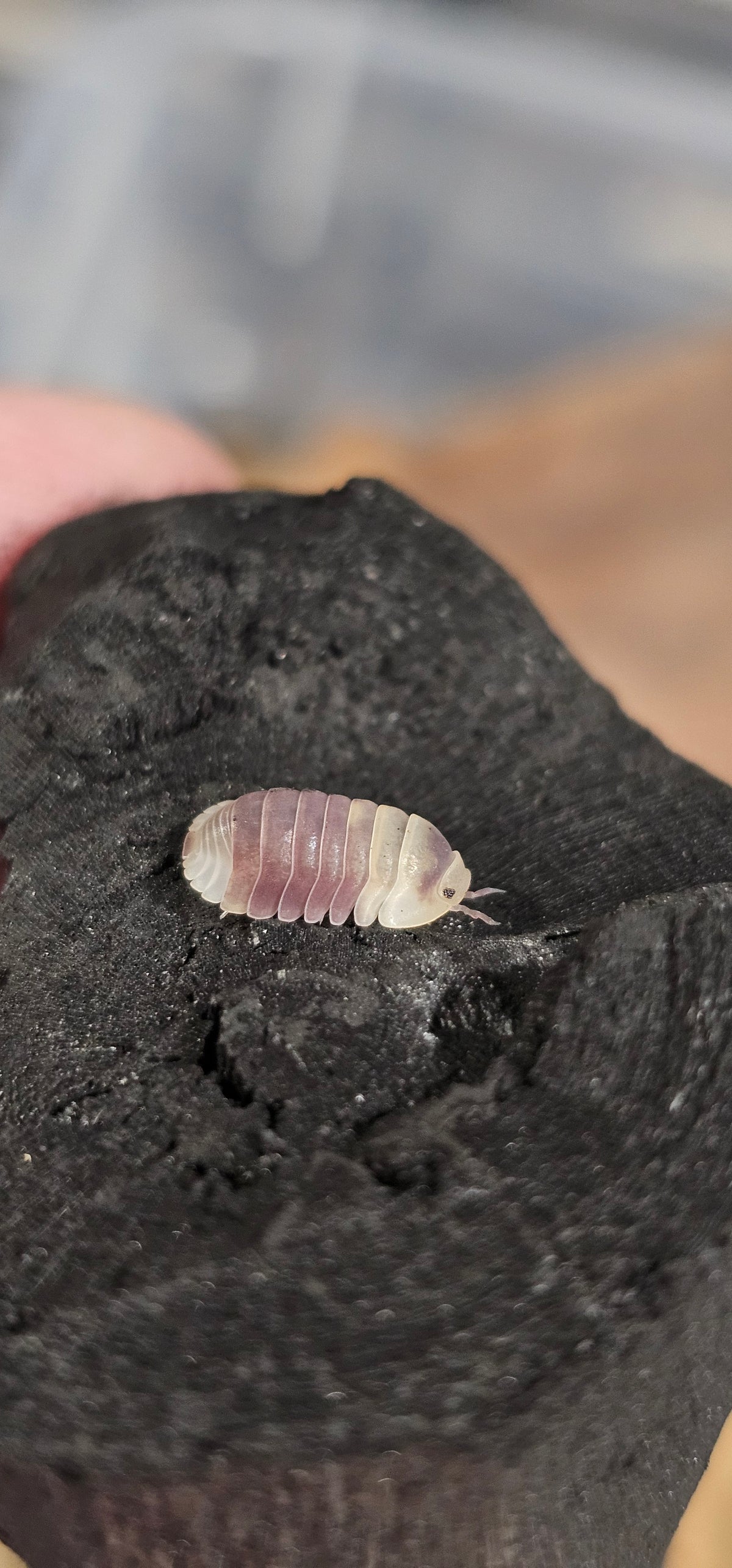
Cubaris sp snow bee
Cubaris sp snow bee
Couldn't load pickup availability
Cubaris sp. Snow Bee
🐝❄️ Cubaris sp. Snow Bee
Cubaris sp. Snow Bee is a stunning and highly sought-after Cubaris, displaying a beautiful contrasting black-and-white pattern that gives them their distinctive “Snow Bee” name.
These are a fantastic choice for collectors who love unusual Cubaris and want something that really stands out in the enclosure. Their bold markings, compact body shape and fascinating behaviour make them a great addition to any serious isopod collection.
As with many Cubaris species, Snow Bees are best kept with stable conditions and plenty of patience, particularly while establishing a new colony.
🏡 Care Requirements
Difficulty: Intermediate
Temperature: Approximately 20–25°C
Humidity: Moderate to high
Ventilation: Good ventilation with a humid area maintained
Substrate depth: Around 5–10 cm
Diet: Decaying leaf litter, rotten wood and supplemental foods
Calcium: Constant access recommended
🌿 Substrate
Provide a deep, organic-rich substrate made from materials such as:
- Decayed hardwood
- Organic soil/compost
- Rotten wood
- Leaf litter
- Sphagnum moss or another moisture-retaining material
A thick layer of dried leaf litter should always be available on the surface. This provides both food and natural hiding places.
💧 Humidity & Moisture
Snow Bees appreciate a humid environment, but the enclosure should never be saturated or waterlogged.
Maintain a moisture gradient within the enclosure, with one area kept slightly wetter and another allowed to remain comparatively drier. This allows the isopods to move between microclimates as required.
Good ventilation is important to prevent stagnant conditions and mould problems.
🍂 Feeding
A good-quality leaf litter mix and decaying hardwood should form the foundation of their diet.
Supplement this with small amounts of suitable foods such as:
- Fish flakes
- Isopod/invertebrate protein foods
- Bee pollen
- Vegetables
- Dried shrimp or other suitable protein sources
Remove fresh foods once they begin to spoil.
🦴 Calcium
Calcium is particularly important for healthy growth and successful moulting.
Provide a constant calcium source such as cuttlebone, calcium carbonate or another suitable reptile/invertebrate calcium source.
🪵 Hides & Enrichment
Give your colony plenty of places to hide using cork bark, rotten wood, leaf litter and natural botanicals.
A well-established enclosure with plenty of organic material will provide the colony with a more natural environment and help reduce stress.
🥚 Breeding
Once settled into their enclosure and provided with stable conditions, Snow Bees can establish and reproduce.
For the best results, avoid excessive disturbance of a new colony. Maintaining consistent humidity, temperature, food availability and calcium is more important than constantly making changes to the enclosure.
⭐ Is Cubaris sp. Snow Bee Right For You?
If you're looking for an eye-catching black-and-white Cubaris with a distinctive appearance, Snow Bee is an excellent choice.
They are particularly suited to keepers who are happy to take their time and allow a colony to establish naturally.
Please note: Individual colonies can have slightly different preferences. Monitor your animals and adjust moisture, ventilation and feeding accordingly.
🖤 Available from Isolife – your home for weird, wonderful and fascinating invertebrates.
Share