Iso Life
Cubaris sp Cappuccino
Cubaris sp Cappuccino
Couldn't load pickup availability
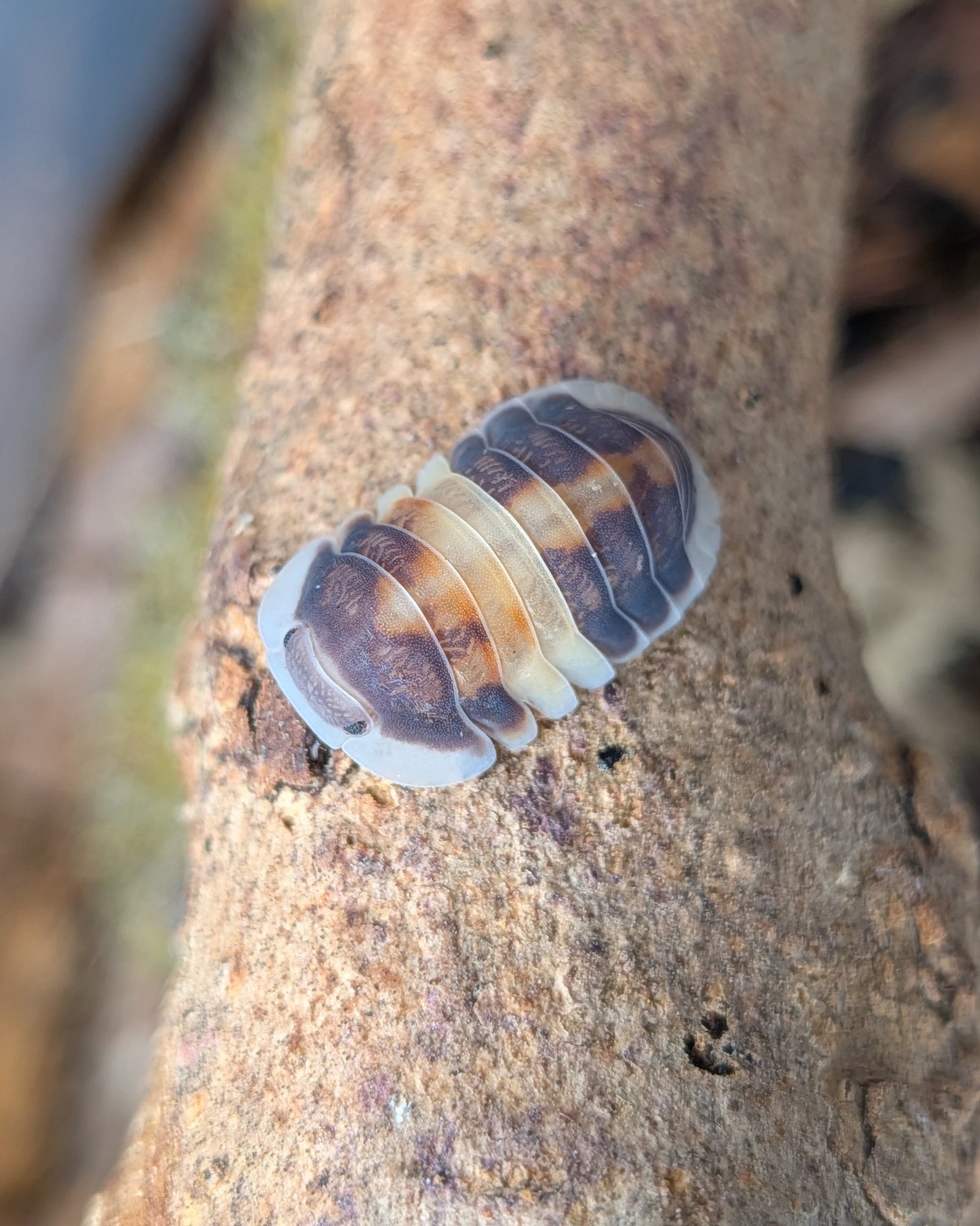
Cubaris sp. “Cappuccino” is a stunning and sought-after species of tropical isopod known for its warm coffee-brown tones and subtle creamy highlights. Their smooth, rounded body shape and rich coloration give them a unique look that stands out in any bioactive enclosure or isopod collection.
These isopods are relatively hardy compared to some other Cubaris species, making them a great choice for keepers who already have some experience with tropical isopods. With the right humidity and a calcium-rich diet, they breed steadily and make an excellent addition to display terrariums or dedicated isopod setups.
Perfect for collectors looking to add a unique and elegant species to their colony.
Care Guide
Difficulty
Intermediate
Size
Approximately 10–15 mm when fully grown.
Lifespan
Typically 2–3 years with proper care.
Temperature
Keep between 20–26°C.
Avoid temperatures dropping below 18°C for long periods.
Humidity
Like most Cubaris species, high humidity is essential.
Maintain 70–85% humidity
Provide a moist side and a slightly drier side in the enclosure
Good airflow is important to prevent stagnant conditions.
Substrate
Use a deep, moisture-retentive substrate such as:
Organic topsoil
Decaying hardwood leaf litter
Rotten wood
Sphagnum moss
Calcium sources (cuttlebone or crushed eggshell)
A 5–10 cm deep substrate works well.
Diet
Cubaris “Cappuccino” are detritivores and will feed on:
Decaying leaves
Rotting wood
Fish food or shrimp pellets
Vegetables (courgette, carrot, cucumber)
Leaf litter as their staple diet
Always provide a calcium source to support healthy moulting.
Enclosure
Small plastic tub or terrarium with ventilation
Plenty of cork bark and leaf litter for hiding places
Keep one area consistently moist.
Breeding
With stable humidity and good nutrition, Cubaris Cappuccino will reproduce steadily, though like most Cubaris species they breed slower than common isopods such as Porcellio.
Share